Harella Font: Elegant Script Handwritten Fonts for Makers
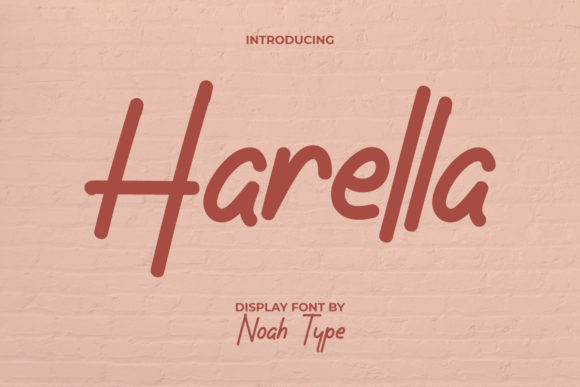
It started with a candle label — one I’d sketched by hand, scanned, and traced in Illustrator, only to realize the flow felt stiff, too uniform, like it had lost its breath. That’s when I opened my font library and typed “Harella.” Instantly, the lowercase g curved just right, the t swept with quiet confidence, and the spacing between letters breathed like real ink on paper. Harella Font is a beautiful and elegant script font that was carefully crafted to give a natural look to any creative project — and for someone who makes physical things — labels, cards, tags, prints — that “natural look” isn’t just aesthetic. It’s authenticity you can hold.
Harella for Candle Labels and Minimalist Product Packaging
Harella shines where less is more: soy wax candle labels, apothecary jars, linen pouches, kraft boxes. Because Harella is a Script Handwritten font built for minimalism, it doesn’t compete with texture or material — it complements it. I used it for a lavender-vanilla scent label printed on uncoated matte stock, pairing Harella for the fragrance name with a light sans serif (like Poppins Light) for ingredients and weight. The contrast felt intentional, not cluttered. For Cricut or Silhouette users: Harella cuts cleanly at 12–16pt on vinyl or sticker paper, especially when using the OTF version with OpenType features enabled. No jagged edges, no awkward joins — just smooth, organic strokes that mimic real pen pressure.
Harella for Wedding Invitations and Elegant Branding
When a friend asked me to design her wedding suite — soft ivory cardstock, dried florals pressed into the corners — Harella became the quiet heartbeat of the whole set. Harella Font is a beautiful and elegant script font that was carefully crafted to give a natural look to any creative project, and that “natural look” translated directly into warmth and sincerity. I used it for names and dates (never full paragraphs — Harella is a display font, not body text), then balanced it with a delicate serif (Cormorant Garamond) for RSVP details. The result? Guests told her the invites “felt like a love letter.” That emotional resonance — gentle, refined, unhurried — is why Harella works so well for boutique wedding stationery, welcome signs, and monogrammed napkin tags.
Harella for Printable Wall Art and Planner Pages
I tested Harella across three printable formats: a 12x12 digital download (“Breathe Slowly”), a weekly planner header, and a minimalist quote page for bullet journal stickers. In every case, Harella delivered subtle personality without overwhelming. As a Script Handwritten font, it adds humanity to clean layouts — think sage green ink on cream paper, or soft gray on off-white digital canvas. For planner pages, I kept Harella at 18–24pt for section titles only; anything smaller than 14pt begins to lose legibility on screen or when printed at home. Bonus: many Harella Fonts include alternate characters and swashes — I swapped the default lowercase f for a flourished version in the wall art file, giving it a custom, hand-finished feel before export.
Harella for Boutique Tags and Handmade Shop Branding
My ceramic mug line needed something that whispered “hand-thrown,” not “mass-produced.” Harella for Boutique Tags gave me that. A single word — “Mornings,” “Still,” “Gather” — set in Harella Font, centered on a cotton twine tag, instantly elevated the unboxing moment. Because this is a Script Handwritten font designed for minimalism, it avoids the overwrought swirls of some scripts — no competing loops, no forced drama. Just graceful entry and exit strokes that guide the eye gently. When paired with a crisp sans serif (like Montserrat Medium) for care instructions or shop name, Harella becomes the soul of your brand voice — warm, grounded, quietly confident.
Harella for Seasonal Stickers and Holiday Digital Downloads
Last December, I designed a set of printable holiday stickers: “Cozy,” “Joy,” “Gather,” “Home.” Harella made them feel handmade, not templated. As Fonts go, Harella stands out in seasonal work because its elegance reads as timeless — not trendy, not dated. I exported each sticker as PNG with transparent background, using Harella at 28pt for medium-sized die-cut sheets. On small stickers (under 1 inch tall), I stuck to one- or two-word phrases — “Yes,” “Love,” “Hello” — and avoided ligatures that might blur at tiny scale. Always check your Harella Fonts package: most include both standard and stylistic alternates, plus uppercase swashes perfect for festive headers in Canva or Adobe Express.
Harella for Tote Bags, Shirts, and Physical Merchandise
Screen-printing Harella on an oat-colored canvas tote taught me something practical: test your vector outline first. Not all Script Handwritten fonts convert cleanly to paths — but Harella does. I outlined the text in Illustrator, expanded strokes, then simplified anchor points slightly to ensure crispness at 8–10 inches wide. For shirts, I limited Harella to chest logos or back necklines — never full-sleeve quotes. Why? Because Harella Font is a beautiful and elegant script font that was carefully crafted to give a natural look to any creative project, and that natural rhythm relies on space, contrast, and intention. Crowding it kills its charm. Also: confirm commercial licensing covers physical goods — most reputable Harella Fonts do, but always double-check included license terms before selling mugs, tees, or patches.
Harella for Greeting Cards and Handmade Stationery
There’s a reason I reach for Harella first when designing birthday, thank-you, or sympathy cards: it carries tone without shouting. A single-line sentiment like “So grateful for you” in Harella feels personal, like it was written just for the recipient. As Fonts go, Harella balances delicacy and strength — the downstrokes have presence, the upstrokes lift like breath. For foil-stamped cards, I kept Harella at 20–22pt with generous letter-spacing (tracking +30); for letterpress, I chose the bolder weight if available, since pressure can soften fine hairlines. And yes — it pairs beautifully with simple serifs or geometric sans fonts for supporting text, never fighting for attention.