Marcana Font: A Serif + Script Duo for Modern Branding
It started with a blank brand board—soft beige background, cursor blinking expectantly—and the quiet pressure of choosing the right typeface for a local ceramicist’s rebrand. She makes minimalist mugs and hand-thrown vases, sells at craft fairs and on Etsy, and wanted something warm but refined: not too cutesy, not too sterile. I opened my font library, scrolled past the usual suspects, and landed on Marcana. Not because it was trending, but because its description—“a lovely duo font serif and script”—felt quietly promising. So I dropped it into her logo draft. And everything clicked.
Marcana for Handmade Shop Branding and Packaging Labels
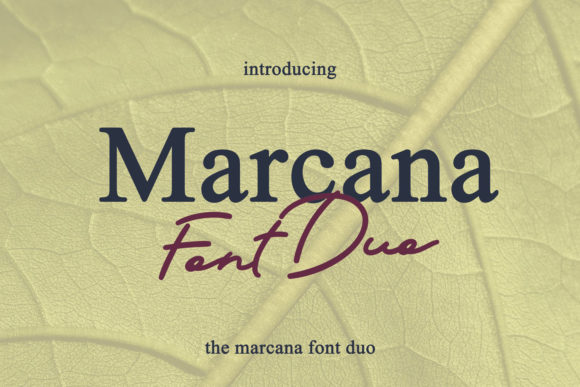
Marcana is one of those rare Script Handwritten fonts that doesn’t sacrifice structure for charm. The script half has gentle, confident strokes—no shaky uncertainty or overdone flourishes—and the serif companion is clean, slightly condensed, with soft bracketed serifs and just enough personality to hold its own next to the script. I used the script for her shop name (“Clay & Co.”) on a matte kraft packaging mockup, and the serif for ingredient notes and care instructions. On uncoated paper, both styles held up beautifully: no ink bleed, no awkward spacing gaps, and zero “digital-looking” stiffness. As a Fonts pair, they create instant visual rhythm—ideal for handmade sellers who need to signal craft without shouting “artisan!”
Marcana for Social Media Graphics and Website Headers
I tested Marcana across platforms: Instagram story banners, website hero text, Pinterest pins. The script shines at medium-to-large sizes (36pt+), especially with subtle tracking adjustments—it breathes well, never clumps. But here’s what surprised me: the serif half works *even better* in web contexts. Its x-height is generous, letterforms are open, and it renders crisply at 24–32pt on screen—unlike many decorative serifs that blur or thin out. I paired it with a neutral sans (Inter, set at 400 weight) for body copy, and used the Marcana script only for headlines and quote callouts. Result? A cohesive, human-feeling hierarchy—not “designed,” but *lived-in*. Perfect for creatives, bloggers, or small studios building digital presence without sacrificing warmth.
Marcana for Wedding Invitations and Elegant Branding
Yes, Marcana fits wedding work—but not the way you might expect. It’s not overly romantic or ornate like some Script Handwritten fonts. Instead, it’s quietly sophisticated: think linen envelopes, pressed botanicals, and muted sage + cream palettes. I mocked up a suite for a micro-wedding venue—script for names and date, serif for location and RSVP details—and the balance felt intentional, not forced. No ligatures or swashes required (though if included, they’d be subtle—this isn’t a font begging for drama). Because Marcana is designed as a duo, it avoids the awkwardness of pairing unrelated scripts and serifs. That consistency saves hours in alignment tweaks and client revisions.
Marcana for Business Cards and Printed Collateral
Printed tests revealed another strength: Marcana’s robust hinting and even stroke contrast. At 10pt on a double-sided business card (matte laminate, 300gsm stock), the serif remained legible—even in fine-print contact lines. The script, naturally, stayed reserved for the top line only (her name), where it added texture without compromising scanability. I compared it side-by-side with three other popular Fonts labeled “script + serif”—and Marcana stood out for its optical balance. Others leaned too heavy, too light, or mismatched in x-height; Marcana feels like two siblings who grew up in the same house, not distant cousins meeting at a font foundry reunion.
When Marcana Isn’t the Right Choice
Be honest: Marcana isn’t built for long paragraphs, legal disclaimers, or corporate annual reports. It’s not a workhorse Script Handwritten font—it’s a considered accent tool. Avoid using the script below 20pt in print or 28px online; lowercase ‘e’, ‘a’, and ‘s’ tighten at small sizes. Also, if your project demands strict multilingual support (beyond basic Latin), verify character coverage before committing—Marcana shines in English-first branding, not global enterprise systems. And always check licensing: this is a commercial font, so confirm usage rights for templates, merchandise, or client deliverables before embedding in Shopify themes or selling branded Canva kits.
How to Test Marcana Before Finalizing Client Work
Don’t just preview the sample glyphs. Drop Marcana into your actual layout: paste real copy (not “Lorem ipsum”), use real colors and backgrounds, export at actual print resolution or screen size. Try it on a product label mockup—does the script wrap cleanly around a curved jar? Does the serif align optically with your icon or logo mark? Export both as PDF and PNG and flip between them. If it still feels effortless after 20 minutes of real-world stress-testing, you’ve got a keeper. That’s how I knew Marcana earned its place in that ceramicist’s final brand system—not because it looked pretty in isolation, but because it *behaved* like a professional Fonts pair should: quietly confident, consistently legible, and unmistakably human.