Roselland Script Font for Digital Branding & Web Design
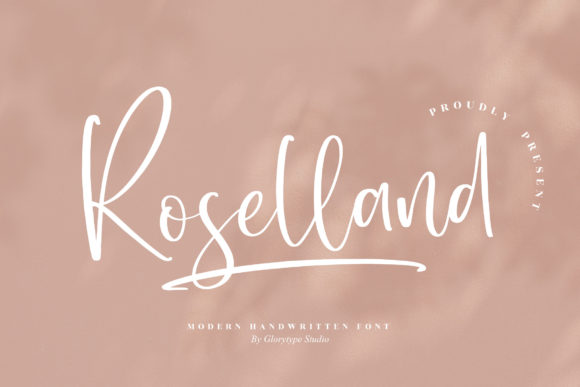
As a UI designer who builds high-converting landing pages, boutique e-commerce sites, and brand-forward digital products, I reach for Roselland when I need a Script Handwritten font that balances elegance with clarity—without sacrificing web performance or visual hierarchy. Roselland is a beautiful script font, crafted with natural stroke variation, subtle bounce, and open letterforms that translate exceptionally well on screens. It’s not just decorative: it’s engineered for intentionality—ideal for hero headlines, logo lockups, branded banners, and any space where tone and trust must be established in under three seconds.
Roselland for Logo Design and Brand Identity Systems
When building a cohesive digital brand identity—especially for lifestyle brands, creative studios, or premium homeware lines—I use Roselland as the cornerstone of the typographic system. Its fluid rhythm and organic terminals give logos warmth and memorability without feeling dated or overly casual. As a Script Handwritten typeface, Roselland supports custom ligatures and alternate characters (check your license for stylistic sets), letting you fine-tune “The” or “&” in a logo lockup for refined spacing. For responsive web use, I embed Roselland as a WOFF2 webfont via @font-face—pairing it with a clean sans serif like Inter or Manrope for navigation, body copy, and CTAs. This pairing delivers contrast, readability, and brand consistency across devices.
Roselland for E-Commerce Product Packaging and Online Store Banners
If you’re designing an online store for handmade ceramics, artisan candles, or botanical skincare—Roselland elevates product packaging mockups *and* live web banners instantly. On Shopify or WooCommerce product pages, I apply Roselland to short headline tags (“Hand-Poured • Small Batch”), hero section subheads (“Meet the Collection”), and shopping bag labels—always at 32–48px on desktop and no smaller than 28px on mobile. Why? Because Roselland is a beautiful script font with generous x-height and clear counters, making it legible even over textured backgrounds or soft image overlays. For dark-mode compatibility, I test Roselland against charcoal or deep navy backgrounds using semi-bold weight variants—never ultra-light—to preserve contrast and WCAG AA compliance.
Roselland for T-Shirts, Mugs, and Merchandise Mockups in Web Layouts
Whether you’re selling print-on-demand apparel or launching limited-run homeware, Roselland adds instant craft credibility to t-shirt graphics, mug quotes, and tote bag slogans—all while staying rooted in digital usability. In Figma or Webflow, I use Roselland for mockup labels, hover-state previews, and product grid accents. Key tip: avoid setting Roselland below 20px in interface elements—it’s a display-focused Script Handwritten font, not body text. Instead, reserve it for short, high-impact phrases like “Made With Love” or “Est. 2022”. For merch-focused landing pages, I pair Roselland with a neutral geometric sans (e.g., Poppins or Space Grotesk) to ensure scannability and conversion clarity—especially in sticky header CTAs like “Shop the Collection”.
Roselland for Book Covers and Editorial-Style Blog Headers
For authors, coaches, and course creators launching digital products, Roselland brings editorial sophistication to blog headers, email opt-in banners, and book cover thumbnails—even within constrained spaces like RSS feeds or newsletter previews. Its calligraphic flow evokes authenticity and voice, which directly supports engagement metrics: readers linger longer on headers set in Roselland because the rhythm invites reading, not skimming. As a Fonts choice for long-form content, I never use Roselland for paragraphs—but I *do* apply it to H1s, pull quotes, and chapter dividers in Notion templates, Ghost themes, or Substack newsletters. Bonus: Roselland’s OpenType features include swash capitals and contextual alternates—perfect for adding polish to “Chapter One” or author bylines without manual kerning.
Roselland for Posters, Quotes, and Social Media Graphics in Web Experiences
In SaaS dashboards, portfolio websites, or digital brand kits, Roselland shines as a visual anchor for quote carousels, testimonial highlights, and campaign posters embedded directly into web layouts. Because Roselland is a beautiful script font with consistent stroke weight and balanced spacing, it scales cleanly from 1600px hero banners down to 400px Instagram story previews exported from Figma. For accessibility, I always provide fallbacks: CSS font stacks like font-family: 'Roselland', 'Playfair Display', serif; ensure graceful degradation. And critically—I verify commercial licensing covers web embedding, client deliverables, and template resale. Most Roselland licenses include WOFF/WOFF2 files, desktop use, and extended web rights—essential if you’re shipping design systems or white-labeled dashboards.
Roselland for Shopping Bags, Name Tags, and Branded Physical-Digital Touchpoints
Hybrid brands—those bridging physical retail and digital presence—rely on Roselland to unify tactile and screen-based experiences. Think: shopping bags with embossed Roselland monograms, name tags for virtual summit badges, or QR-code landing pages styled with matching typography. In practice, I export Roselland SVG paths for laser-cut signage, then mirror those exact weights and spacing in CSS for the corresponding web page. That consistency builds subconscious recognition: users see the same curve in “Elena” on a conference badge and “Elena” in a webinar registration form—and feel the brand is intentional, human, and trustworthy. As a Script Handwritten font, Roselland avoids robotic uniformity while remaining legible at 18px+ on retina displays—making it viable for interactive name-tag generators or dynamic certificate builders.
Roselland for Homeware Designs and Product Packaging Mockups in Figma
When prototyping homeware landing pages—think ceramic mugs, linen napkins, or soy wax candles—I drop Roselland into Figma frames for packaging mockups, shelf-label previews, and scroll-triggered animations. Its gentle slant and airy letterfit prevent visual crowding in tight spaces like jar labels or coaster prints. For web use, I export Roselland as variable-weight webfonts (if supported) or load two static weights: Regular for headings and Medium for accent text. Always test line height: 1.3–1.4x works best for Roselland in hero sections; anything tighter compromises its handwritten charm. And yes—Roselland is a beautiful script font for “small batch,” “locally sourced,” or “hand-thrown” descriptors—but only when paired with ample whitespace and a highly legible secondary typeface for ingredients, care instructions, or size charts.