Windy: A Luxurious Script Handwritten Font for Makers
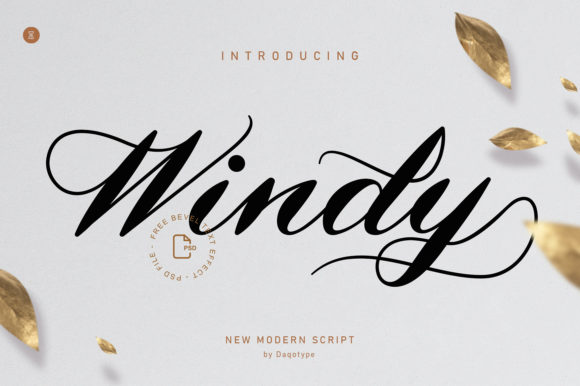
It started with a candle label—three words I’d written a dozen times in other fonts, but none felt quite right. “Honey Lavender.” Soft, warm, handmade. Then I opened Windy, and everything clicked. That first lowercase w, with its graceful entry stroke and subtle upward flick? It didn’t just say “candle”—it whispered “carefully made,” “thoughtfully scented,” “intentionally beautiful.” Windy is a classic Script Handwritten font that carries an elegant style and luxurious vibe—not flashy, not fussy, but quietly confident. As a maker who designs labels, cards, digital printables, and seasonal shop assets, I reach for Windy when I want my typography to feel like part of the product’s soul.
Windy for Wedding Invitations and Elegant Branding
When I designed a set of wedding welcome boards and suite inserts last spring, Windy became the quiet hero. Its fluid rhythm works beautifully for names, dates, and short phrases—like “Est. 2024” or “Together with Love”—without competing with delicate florals or textured paper. Because Windy is a Script Handwritten font built for display use, it shines at larger sizes (24pt and up) on printed invitations, vellum overlays, and acrylic signage. I paired it with a clean sans serif for addresses and details—creating contrast without clutter. Just remember: Windy isn’t meant for long paragraphs or body text. It’s a premium Fonts choice for moments that deserve presence and poise.
Windy on Candle Labels and Handmade Product Packaging
Candle labels are where Windy truly proves its worth in real-world production. I tested it across three label materials: matte sticker paper, kraft tags, and clear vinyl. At 14–18pt, the letterforms held crispness through both inkjet and laser printing—and crucially, cut cleanly on my Cricut Maker using the included OTF file. The slight variation in stroke weight adds organic charm without sacrificing legibility. For scent names like “Amber & Sage” or “Vanilla Bean,” Windy gives instant warmth and sophistication. When paired with a simple serif for ingredients or net weight, the contrast elevates perceived quality—customers don’t just see a candle; they sense craftsmanship.
Windy in Printable Wall Art and Digital Downloads
I added Windy to my best-selling printable wall art bundle last fall—and instantly noticed how it transformed mood boards and quote prints. Phrases like “Breathe Deeply” or “Gather Joy” gain emotional resonance with Windy’s gentle curves and balanced spacing. As a Script Handwritten font, it avoids the stiffness of calligraphic fonts with rigid angles, making it ideal for cozy, modern farmhouse or minimalist boho aesthetics. In Canva and Adobe Illustrator, I use its built-in swashes and alternate characters sparingly—just one flourished capital “S” or “L” per design—to keep focus on meaning, not ornament. All Fonts files include standard ligatures and multilingual support, which matters when designing for global printable markets.
Windy for Greeting Cards and Seasonal Shop Tags
For holiday card suites and boutique gift tags, Windy delivers consistent elegance across formats. I used it for “Merry & Bright” on foil-stamped cards and “With Love” on mini kraft tags—each time adjusting tracking slightly to suit the space. Its generous x-height and open counters ensure readability even at 12pt on small stickers or 10mm-tall packaging seals. Because Windy is a versatile Script Handwritten font, it adapts seamlessly from rustic linen tags to glossy holiday mugs. I always test print a single word at actual size before finalizing—especially for curved surfaces like tumblers—since script fonts can shift in perception depending on substrate and scale.
Windy on Tote Bags, Shirts, and Fabric-Based Merchandise
When screen-printing tote bags for a local artisan market, I chose Windy for the phrase “Made With Care” across the front panel. Its smooth flow translates well to fabric—even at medium sizes (3–4 inches tall), the strokes remain distinct and graceful. Unlike some ornate scripts, Windy avoids thin hairlines that risk breaking up in plastisol ink or embroidery digitizing. For shirts and tea towels, I pair it with a sturdy sans serif for care instructions or sizing charts—keeping hierarchy clear while letting Windy anchor the emotional tone. As a commercial Fonts license, it covers physical merchandise, so no extra permissions needed for your Etsy shop or local craft fair stall.
Windy for Planner Pages and Hand-Drawn Style Printables
In my weekly planner inserts, Windy lives in headers and section dividers—not as filler, but as intentional punctuation. “Focus This Week,” “Gratitude Log,” “Big Wins”—each feels more personal, more human, because of how Windy leans into its Script Handwritten roots. I avoid overusing it on dense layouts, but where it appears, it guides the eye and invites reflection. For digital download previews, I render Windy at 72dpi with soft anti-aliasing—it looks warm and inviting on screens without pixelation. And because the font includes OpenType features, I toggle between stylistic alternates to keep repeated designs feeling fresh across seasonal bundles.
Windy in Signage, Posters, and Boutique Display Design
A chalkboard-style poster for my shop’s spring launch featured “New Arrivals” in Windy, layered over watercolor texture. The font’s natural variation mimics hand-painted lettering—no tracing, no pressure to “get it perfect.” That’s the quiet power of Windy: it feels handmade, even when digitally placed. For foam-core signs or framed posters, I scale it to 48–72pt and add minimal shadow for depth. As a Script Handwritten font, it pairs effortlessly with vintage-inspired serifs or airy geometric sans fonts—never fighting for attention, always enhancing atmosphere. Whether you’re designing for Instagram story graphics or physical shop windows, Windy helps your message land with sincerity and style.